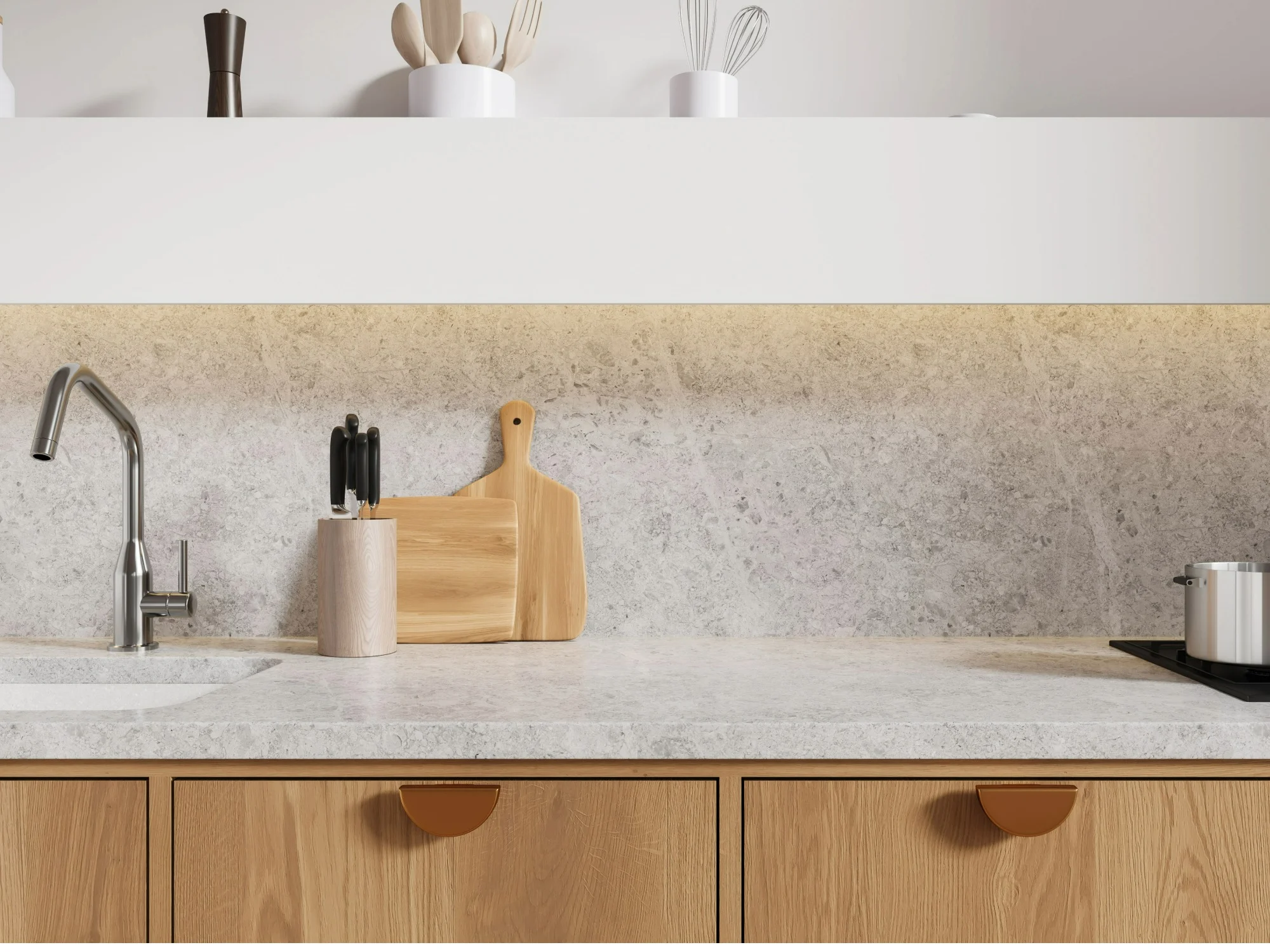
Kitchen countertop materials: A guide to choosing
Your kitchen worktop has a lot to put up with. It’s where meals are prepared, shopping bags are unpacked, coffee cups collect, and the occasional baking disaster unfolds. But it also has a big influence on how your kitchen looks and feels. The right surface can add character to simple cabinetry or become the main feature of the room.
Current kitchen design is moving towards more natural-looking finishes and warmer colours. Marble-inspired veining remains popular, while textured surfaces, earthy tones, and combinations of wood and stone are helping kitchens feel more personal. At the same time, homeowners still need a worktop that stands up to daily use and fits their budget.
So, which kitchen countertop materials are worth considering? In this guide, we’ll look at the most popular options, what to think about before choosing and how we can help you find the right fit for your home.
A breakdown of the most popular materials
Every worktop material has its own strengths. Some offer the natural variation of stone, others provide a consistent finish with minimal upkeep, and some give you more freedom to experiment with colour and design. Let’s have a look at the most popular ones and explain their key features.
Quartz
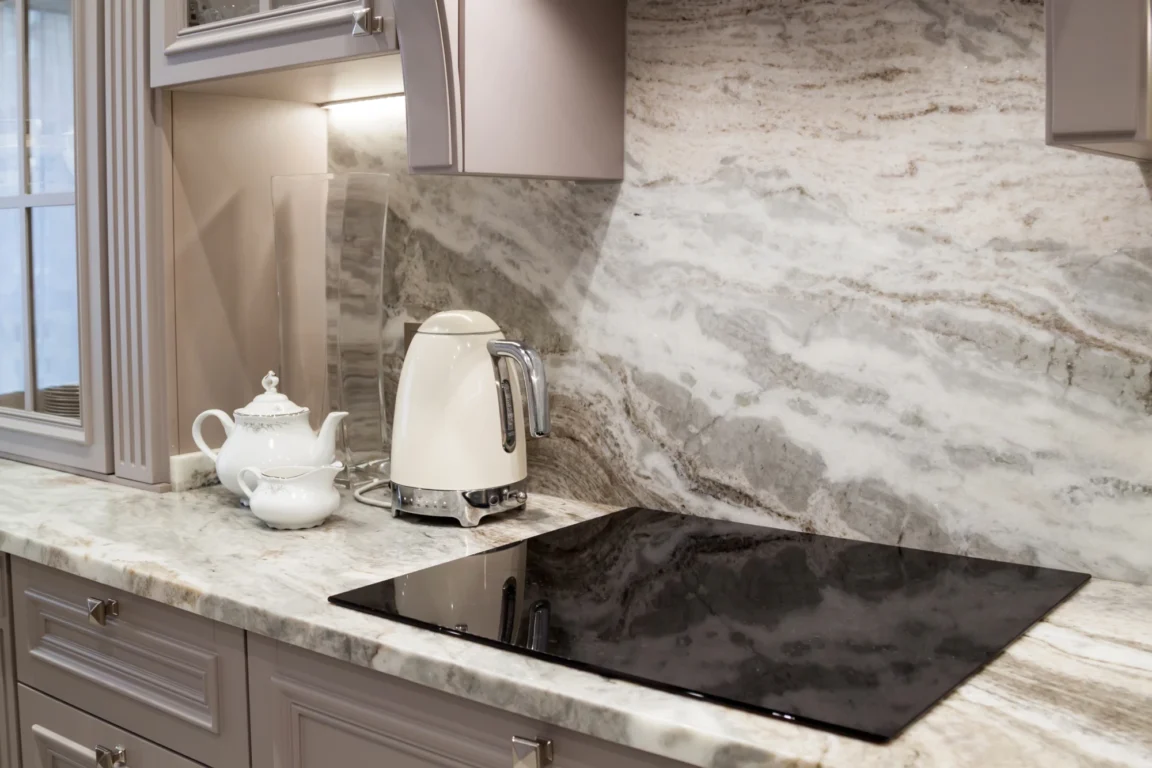
Quartz is still a popular choice for homeowners who want the appearance of natural stone without quite so much maintenance. Made from quartz particles combined with resins and other materials, it offers a consistent, hard-wearing surface that works well in busy kitchens.
One of its biggest advantages is that quartz is non-porous, so it resists everyday staining and doesn’t need to be sealed like many natural stones. For households where the kitchen sees plenty of action, that can make looking after the worktop much simpler.
There’s plenty of choice when it comes to appearance, too. Alongside subtle whites and greys, current designs include soft veining and more dramatic marble-inspired patterns. These can create anything from a quiet, understated backdrop to a statement island that draws the eye as soon as you enter the room.
Quartz can also work well with matching splashbacks or waterfall island edges, where the surface continues down the side of the island for a more unified finish.
It isn’t indestructible, though. Excessive heat can damage the resin content, so hot pans should always be placed on a trivet rather than directly onto the surface. Quartz can also sit at the higher end of the price range, depending on the design and manufacturer. For many homeowners, its combination of durability and easy maintenance makes it worth considering.
Granite
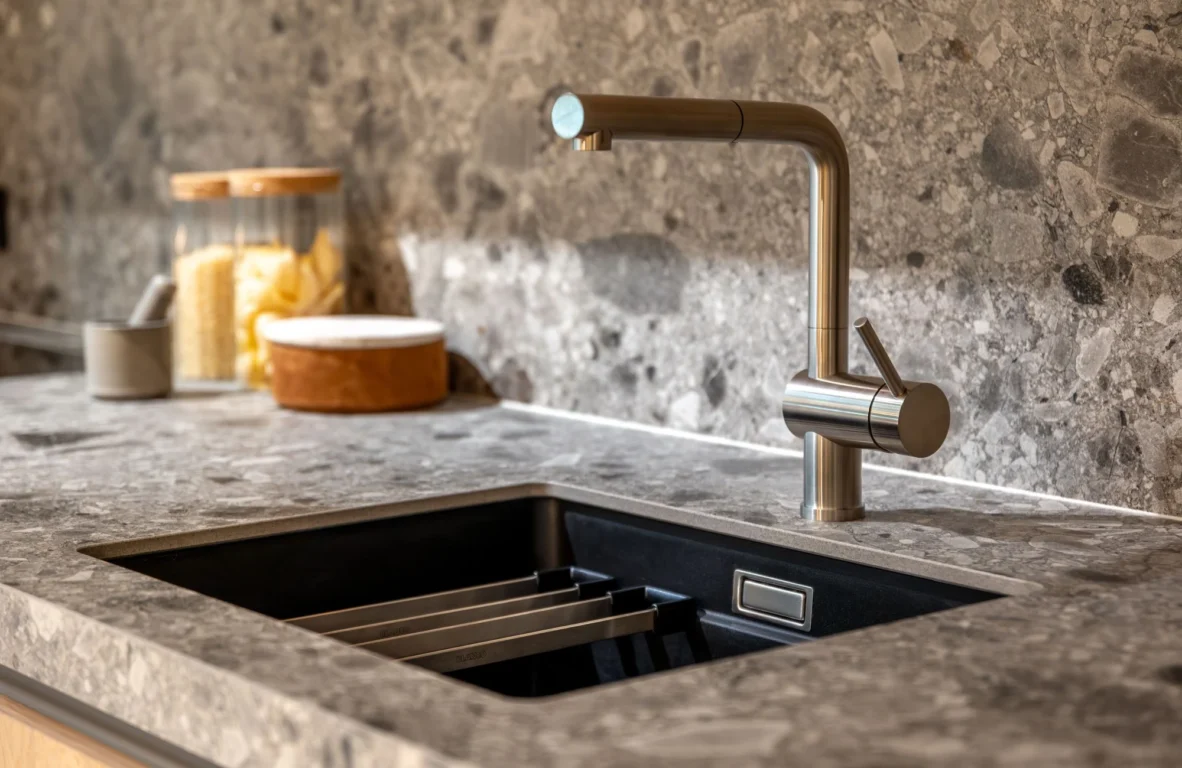
When it comes to kitchen countertop materials that have own natural character, granite is worth a closer look. Each slab has its own pattern and colour variations, so no two installations look exactly alike.
Granite is a durable natural stone that handles everyday kitchen use well and has good heat resistance. Its distinctive markings can add depth to a kitchen, especially when paired with simple cabinetry that allows the stone to take centre stage.
While polished granite remains a classic option, more understated finishes can create a softer, more tactile look. Darker stones can bring contrast to lighter cabinets, while cream and earthy shades work well with timber, sage green, and other nature-inspired colours.
Granite is porous, however, and usually needs sealing to help protect it against stains. The level of care required will depend on the particular stone and the products used to maintain it. Spills should still be wiped up quickly, especially around cooking and preparation areas.
Costs vary according to the finish and complexity of the installation. If you want a natural material with individual character and a long-lasting presence, granite can be a worthwhile investment. Can’t decide between quartz and granite? Check out our guide to help make up your mind.
Acrylic solid surface

Acrylic solid-surface worktops offer plenty of design flexibility, making them a good option for homeowners who want a clean finish without being limited to the look of natural stone.
Available in a wide range of colours and patterns, acrylic surfaces can work with everything from bold cabinetry to pared-back, minimalist schemes. Their non-porous finish is easy to clean, and many minor marks or scratches can be repaired by a specialist, depending on the product and the extent of the damage.
One of the biggest advantages is the potential for seamless detailing. Joints can be made less visible, and some solid-surface designs allow sinks to be integrated into the worktop itself. This creates a smooth transition between the basin and surrounding surface, with fewer visible edges to interrupt the design.
Certain systems also allow features such as drainage grooves to be incorporated into the worktop. The possibilities depend on the material and manufacturer, so it’s worth discussing the details with your designer before settling on a specification.
Acrylic is generally less resistant to high temperatures and scratching than some harder worktop materials, so it still needs appropriate care. Even so, its repairability and potential for bespoke detailing make it a useful option for kitchens where a seamless finish is a priority.
Laminate
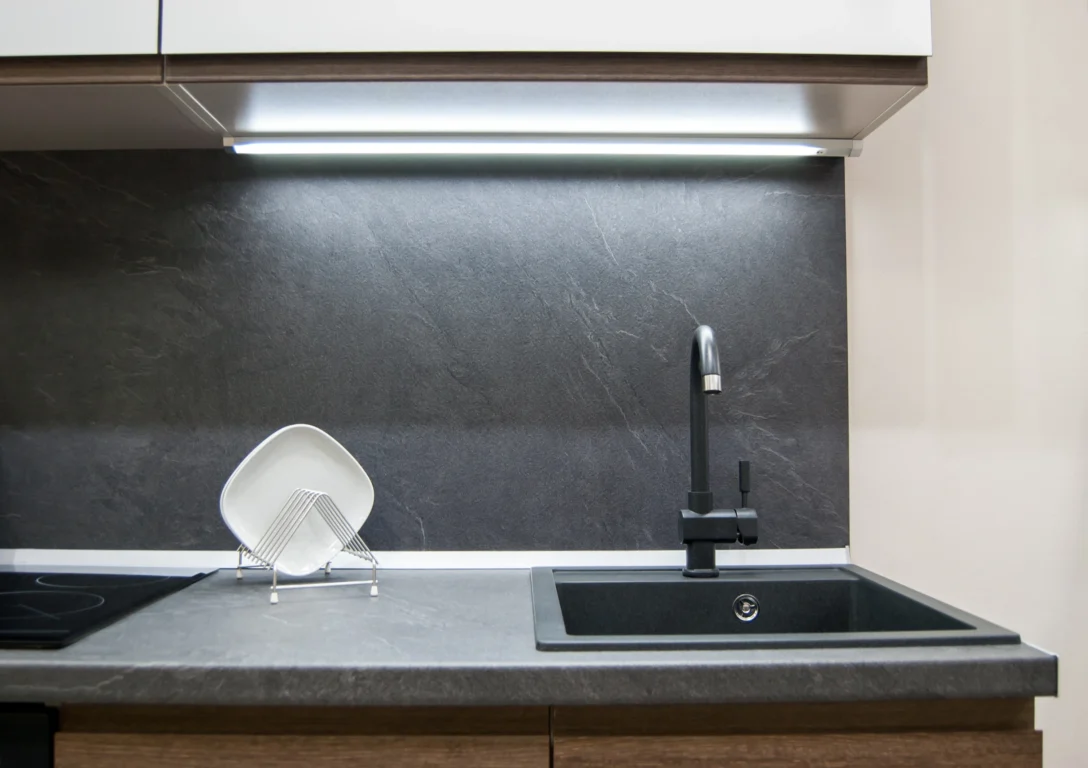
This is a seriously stylish worktop doesn’t have to come with a premium price tag. Laminate remains a practical, affordable choice, with designs that can recreate the appearance of stone, concrete, or timber without the same cost.
The range has moved well beyond the basic patterns many people associate with older kitchens. Today’s laminates feature much more convincing textures, which makes it easier to achieve a considered look on a tighter budget.
Laminate is relatively easy to clean and can be a sensible choice for households looking to refresh their kitchen without investing in a more expensive surface. It is also available in plenty of colours, so you can choose something subtle or use the worktop to introduce contrast.
There are a few limitations to bear in mind. Laminate is less resistant to heat and scratches than many stone or solid-surface alternatives. Water can also penetrate exposed edges or poorly sealed joints, which can cause swelling.
For that reason, careful installation and sensible day-to-day use are important, especially around sinks and other areas exposed to moisture. But if you want an attractive, straightforward worktop that keeps the overall project cost manageable, laminate is still a strong contender.
Wood

Wood brings a warmth that can be difficult to replicate with other kitchen countertop materials. Its natural grain and subtle variations give a room so much texture and personality.
Timber worktops work particularly well alongside painted cabinetry and muted colours like olive green and soft brown. They can also be used selectively rather than across the entire kitchen. For example, a wooden section on an island can create a warmer preparation or serving area, while a more water-resistant surface is used around the sink.
That mix of materials is a useful way to introduce contrast without making the overall scheme feel busy. It also allows you to choose different surfaces according to how each part of the kitchen will be used.
Wood does need more attention than many engineered surfaces. Depending on the finish, you might need to regularly apply oil to protect it against moisture and staining. Standing water should be wiped away, particularly around sinks, and chopping directly on the worktop can leave marks.
Scratches and dents may develop over time, although some homeowners appreciate the lived-in character this creates. With suitable care, a timber worktop can age gracefully and bring a traditional, natural feel to your kitchen.
Ceramic

Ceramic and porcelain worktops are worth considering if you want a crisp, modern surface with strong resistance to everyday wear. Manufactured at high temperatures, these materials are generally non-porous and resistant to stains and heat, although performance varies between products.
Their design options have expanded considerably, with finishes that imitate marble, limestone, and other natural stones. You can choose an understated pattern or a more expressive design with prominent veining. Large-format slabs can also help create a consistent appearance across worktops and splashbacks.
Porcelain is particularly useful for achieving the look of natural stone without some of the same maintenance requirements. It can also be available in slim profiles, which suit contemporary kitchens where lighter-looking surfaces and clean lines are a priority.
There are some trade-offs. Although the surface itself is hard-wearing, edges can be vulnerable to chipping if struck heavily, and repairs can be difficult to disguise. Installation requires specialist handling and precise fabrication, so the quality of the fitting matters.
Key considerations when choosing kitchen countertop materials
The look of a worktop might catch your attention first, but the best choice is one that continues to suit your home long after the initial excitement of a new kitchen has passed. These are the main points to weigh up.
How you use your kitchen
Think about what happens in your kitchen on an ordinary day. Do you cook most evenings or prepare meals for a large family? Is your island used for everything from chopping vegetables to homework and working from home?
If your worktops are always in use, a surface that’s easy to clean and doesn’t demand much maintenance might be a better fit than a more delicate material. If you enjoy cooking and want a natural stone surface, you might be happy to take on a little extra care in return for its appearance.
It’s also worth thinking about where different tasks happen. The area around the hob may need to cope with hot cookware, while the worktop around the sink will see more water and cleaning products. Choosing a material that suits each area can make a real difference to how well your kitchen performs.
Maintenance and longevity
Every material needs some care, but the amount varies. Quartz, acrylic, and many ceramic or porcelain surfaces are non-porous and don’t require the same regular sealing as natural stone or some timber worktops. Granite and wood can still be excellent choices, provided you’re comfortable with their maintenance needs.
Longevity is about more than toughness, too. Consider whether you’ll still like the colour and pattern in several years, and whether the material will work if you update your cupboard doors, handles, or wall colours later. A worktop you can live with comfortably for years is often a better investment than one chosen purely because it’s fashionable in 2026.
Budget and overall value
Worktop costs depend on the material, thickness, finish, amount required, and complexity of the installation. Cut-outs for sinks and hobs, shaped edges, integrated splashbacks, and unusual island designs can all affect the final price.
It helps to look at the worktop as part of the wider kitchen budget. A premium surface might be the right choice for a statement island, while a more affordable material could work elsewhere. Equally, choosing a lower-cost worktop may free up budget for storage, lighting, or other features that make the room more useful.
Ask for a clear breakdown of what’s included, including fabrication and fitting. Comparing materials on price alone can be misleading if their maintenance needs or lifespans differ.
How Premier Crafts can help
With over 20 years of experience in kitchen design, our team can help you choose kitchen countertop materials that fit your lifestyle, taste, and budget. We offer personalised consultations, taking the time to understand your requirements. Whether you want a low-maintenance worktop for a busy family kitchen or a statement piece that enhances your space.
Our experts will walk you further through the benefits and drawbacks of various materials, allowing you to make an informed decision that balances style and functionality. From natural stone to engineered surfaces, you’ll be able to see and feel the textures, colours, and finishes before making a decision.
Our design and installation process
We take a stress-free approach to designing and installing your bespoke kitchen countertop. Here is what you can expect from our process:
1. Design phase
After we’ve established your requirements during your consultation, we’ll help you select the best material, colour, and finish to complement your kitchen style.
You’ll have access to material samples and showroom displays to make the decision easier. From natural stone to engineered surfaces, you’ll be able to see and feel the textures, colours, and finishes before making a decision.
2. Measurement and templating
Precision is essential for a flawless fit. Our experts take precise measurements of your space to ensure that your countertop is perfectly suited to your kitchen layout.
3. Fabrication and installation
Your chosen worktop is expertly cut and finished to the highest standards, ensuring precision and quality at every stage of the process. Our skilled installers will handle the entire process with care and attention to detail, from seamless joints to perfectly polished edges.
Ready to get started?
Get in touch today to book an initial consultation with us. Or if you’d like to come and see a selection of kitchen countertop materials in person to get a feel for what you like, why not drop by one of our showrooms? With locations in Washington, Cullercoats, and Cleadon, there’s sure to be a location nearby.
Back to Blog