
Quartz vs granite worktops: Which is right for your kitchen?
There are various countertop surfaces to choose from when designing a new kitchen, and customers can often feel overwhelmed by the sheer variety of options on the market.
During customer consultations, we often discuss the classic debate of quartz vs granite worktops. Both materials have the benefit of strength and timeless style, which makes them a consistent favourite amongst North East homeowners.
However, beneath their attractive exterior finishes lie different compositions, maintenance requirements, and practical benefits. Because countertops typically account for 10% to 15% of your total remodel budget, making an informed decision results in an investment that stands the test of time.
Natural stone vs engineered stone
To truly appreciate quartz or granite worktops, it helps to understand how they are sourced, manufactured, and prepared for daily household use.
Granite is a 100% natural stone quarried directly from the earth in blocks, which are then cut into thick slabs and polished. Because it is carved straight from nature, no two slabs of granite are identical, offering a unique geological artwork for your home, with natural mineral deposits and distinct veining.
Conversely, quartz worktops are engineered stone. They typically consist of approximately 90% to 93% crushed natural quartz crystals bound together with high-performance polymer resins and pigments. This man-made manufacturing process allows for greater control over colour consistency and pattern predictability.
Appearance and available finishes
The aesthetic appeal of granite lies largely in its natural movement and crystalline structures that capture light and create a depth that manmade materials often struggle to fully replicate.
On the other hand, because quartz is engineered, manufacturers can mirror the luxurious look of marble with soft grey veining or create modern solid-colour surfaces that remain completely consistent from sample to final installation.
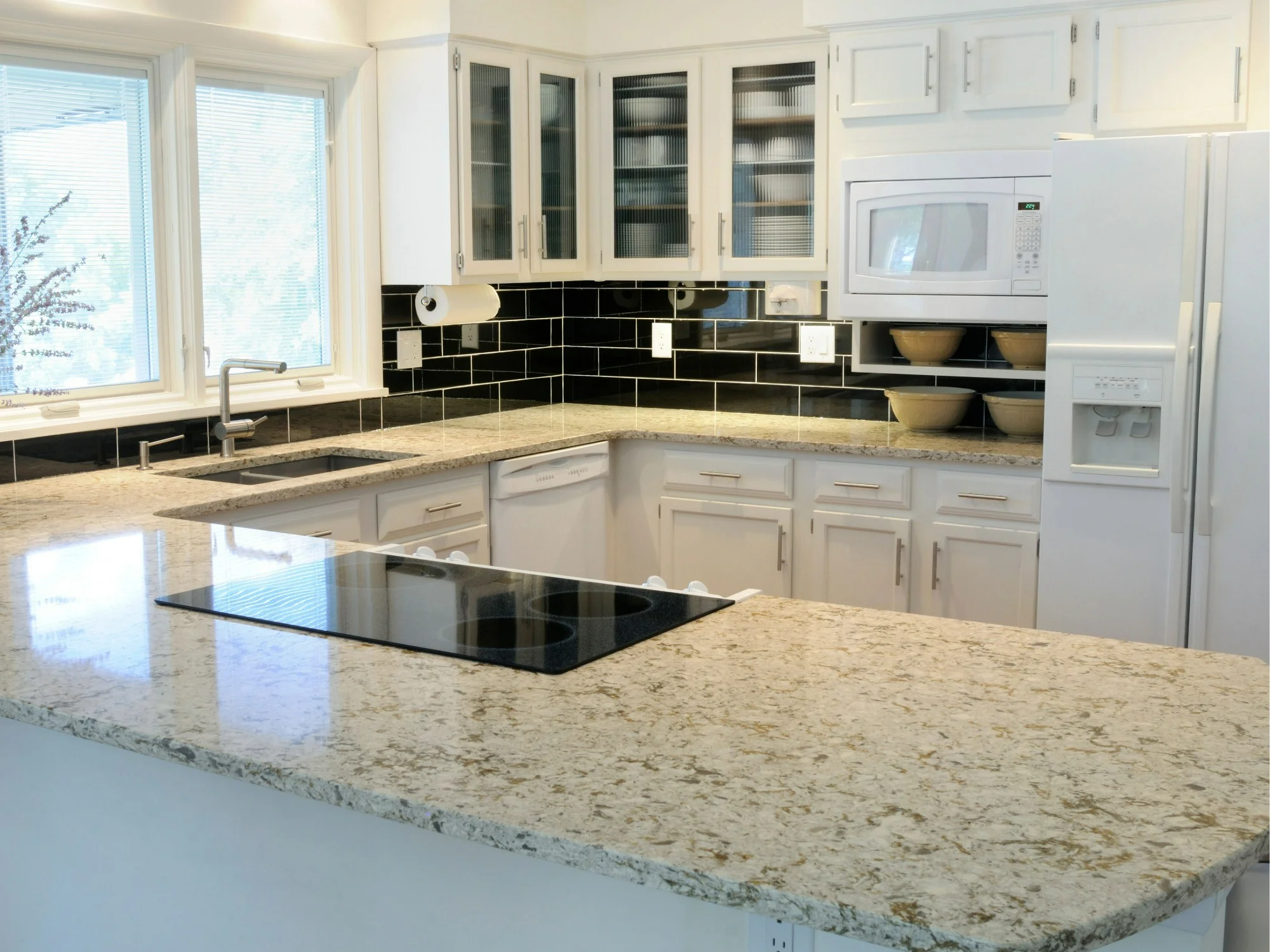
Both materials support a variety of popular surface finishes to match your interior theme:
- Polished surfaces are highly reflective and glossy
- Honed/matte finishes are low-sheen and offer a softer, more tactile touch and can hide fingerprint smudges
- Leathered/textured surfaces provide a slightly dimpled finish that highlights natural mineral grains and can work well in farmhouse-style, bohemian, and traditional kitchens
Durability and resistance to everyday damage
When looking for durable kitchen worktops, both quartz and granite perform exceptionally well, though they handle physical stress and daily impact slightly differently.
Granite is remarkably hard and resilient against scratching. You can comfortably prep food on a granite surface without worrying about knife blades scratching the stone, though using a chopping board is still recommended to protect your kitchen knives. It absorbs heavy impacts well, although extreme force on vulnerable edges can cause chipping.
Quartz features structural reinforcement provided by its resin binders, making it exceptionally flexible and less prone to cracking under normal installation stress or heavy daily impacts. It has impact resistance and a dense structure that makes it practically unbreakable in standard kitchen environments.
Heat and stain resistance
Performance in a busy kitchen often hinges on how a worktop handles heat and accidental liquid spills.
Granite is a volcanic rock formed under intense heat and pressure, meaning it possesses superior natural heat resistance. You can place hot pots and pans directly onto granite from the hob without scorching or damaging the surface. Quartz, conversely, contains polymer resins. While it handles ambient kitchen warmth and hot mugs easily, prolonged exposure to extreme heat (such as a hot cast-iron pan taken straight from the cooker) can discolour or scorch the resin binders.
When it comes to staining, quartz is naturally non-porous because the manufacturing process seals resin into every microscopic gap. It never requires chemical sealing and repels wine, coffee, oil, and citrus juices effortlessly. Granite is a porous natural stone. While factory sealing makes it highly stain-resistant initially, granite does require periodic resealing (typically once every 12 to 24 months) to maintain its barrier against liquids.
Suitability for busy family kitchens
Modern family kitchens demand surfaces that can withstand heavy multi-tasking, from chaotic morning breakfasts and school lunch prep to arts and crafts. Both stones excel in high-traffic environments, which explains why engineered quartz is the leading choice for UK kitchen worktops, chosen by 50% of homeowners upgrading their counters. Its non-porous nature makes it hygienic in that it resists bacterial growth and food residue, while granite provides an anchor that handles heavy daily wear.
Cost and long-term value
Budget is often the deciding factor in home renovations. Generally, standard-grade granite and mid-range engineered quartz occupy a very similar price bracket, typically ranging from £300 to £600+ per square metre supplied and installed, including standard template and fabrication fees.
However, pricing can vary based on your specific selections. Rare granite slabs featuring complex mineral formations or intricate edging can result in premium prices. Premium quartz ranges with multi-layered veining, or quartz with a particular thickness or complex cutouts, can also come at a higher price.
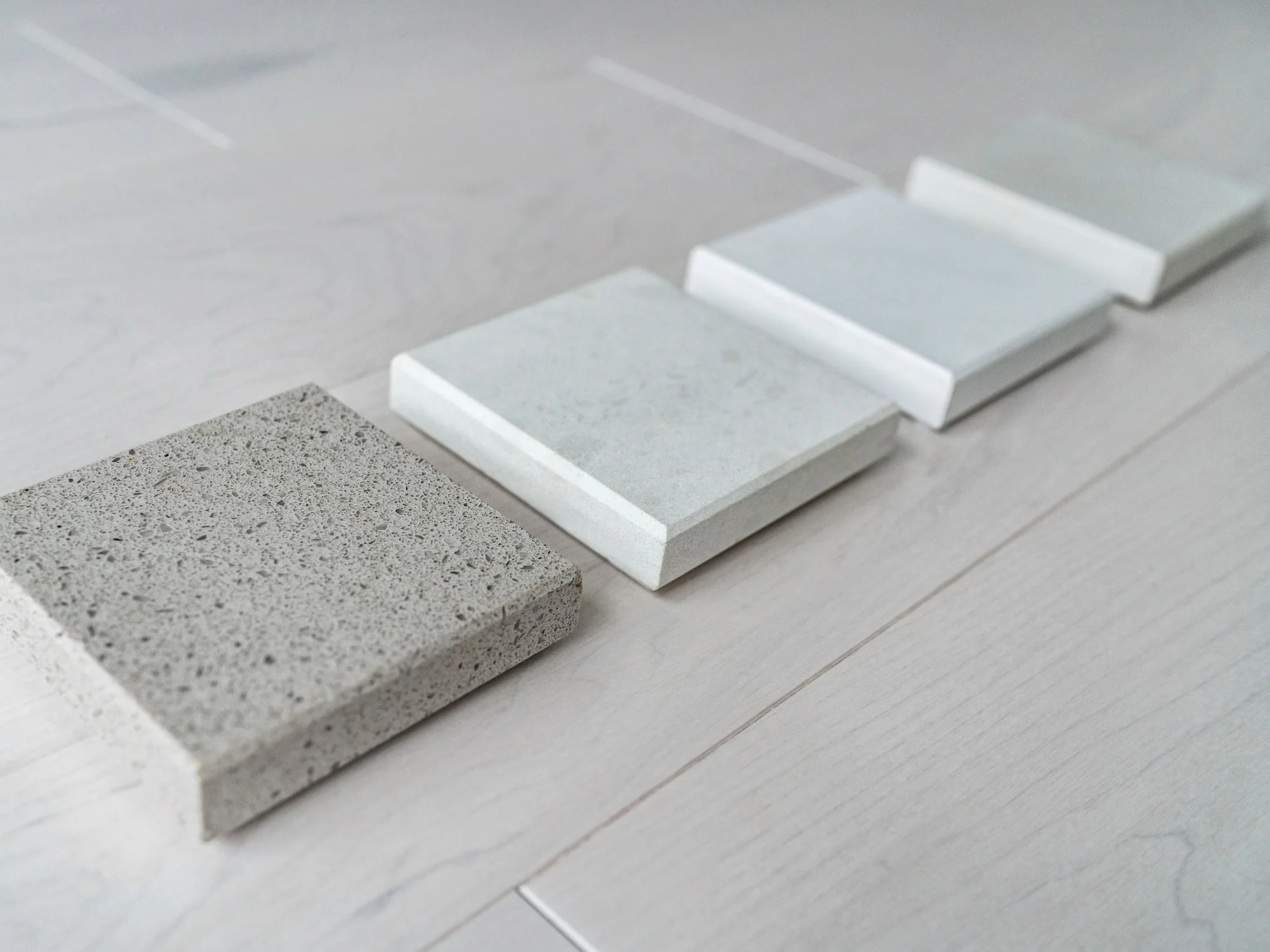
Comparing quartz vs granite worktops directly, quartz stands out for its engineered consistency, complete non-porosity, and lack of maintenance, whereas granite shines through its natural geological origins, heat tolerance, and uniqueness. While quartz offers flexibility and impact resistance through its resin binders, granite provides raw hardness and exceptional scratch resilience. Ultimately, choosing between them depends entirely on matching these distinct characteristics to your household demands and design goals.
Deciding on the ideal surface can feel daunting given the range of visual and practical factors at play. To help navigate this choice, Aaron, the Head Designer at Premier Crafts, offers this expert advice:
“When customers come into our showroom torn between these two materials, I always tell them to look closely at how they live rather than just what catches their eye. If you love baking, like natural materials, and don’t mind a tiny bit of routine maintenance, granite offers unmatched soul and character. But if your kitchen is the heart of your home where spills happen constantly and you want zero fuss with zero sealing, engineered quartz is the option to go for.”
Frequently Asked Questions
1. Is it better to get quartz or granite?
It depends entirely on your lifestyle. Quartz wins on low maintenance and pattern consistency, whereas granite wins on natural uniqueness and direct heat resistance.
2. What gives granite its sparkle?
The signature sparkle in granite comes from natural mineral crystals trapped within the molten rock during its formation millions of years ago, most notably quartz, mica, and feldspar crystals that reflect light.
3. Are granite countertops out of style in 2026?
Not at all. While minimalist white quartz dominated previous years, 2026 has seen a resurgence in natural stone. Homeowners are increasingly turning to granite for its warmth and unique character in luxury kitchen designs.
4. What can ruin a quartz countertop?
Harsh chemical strippers, bleach, oven cleaners, and extreme localised heat can damage the polymer resins in quartz. While durable, it is not indestructible and requires proper care to avoid chemical dulling or thermal shock.
5. Can I put a toaster on my quartz countertop?
Yes, everyday kitchen appliances like toasters, kettles, and coffee machines are safe on quartz worktops. The caution applies specifically to searing-hot pans taken straight from the hob without a protective trivet.
6. Is quartz more expensive than granite?
They are generally comparable in price. Entry-to-mid-range options for both materials cost roughly the same, though rare exotic granite and high-end designer quartz ranges can push prices higher depending on custom fabrication needs.
Contact Premier Crafts to discuss quartz vs granite
Choosing between quartz and granite worktops ultimately boils down to balancing your aesthetic vision with your daily lifestyle requirements. Whether you are drawn to the bespoke, natural beauty of quarried stone or the engineered precision and uniformity of manufactured quartz, both options deliver exceptional style, durability, and long-term value to your home.
Ready to transform your kitchen? We invite you to discuss kitchen tops with a Premier Crafts kitchen designer today to find the perfect surface tailored to your home. Get in touch for advice.
Back to Blog


