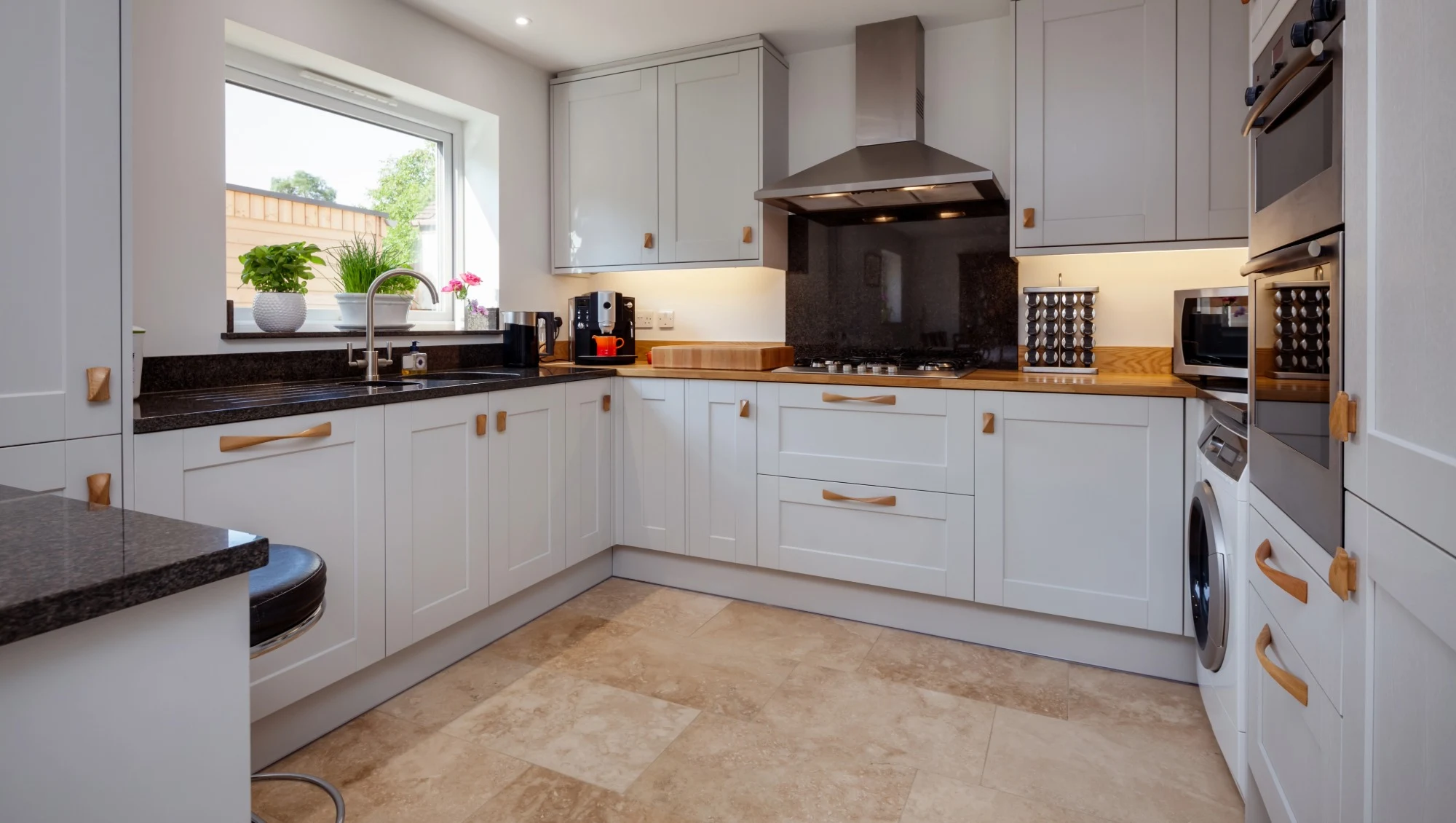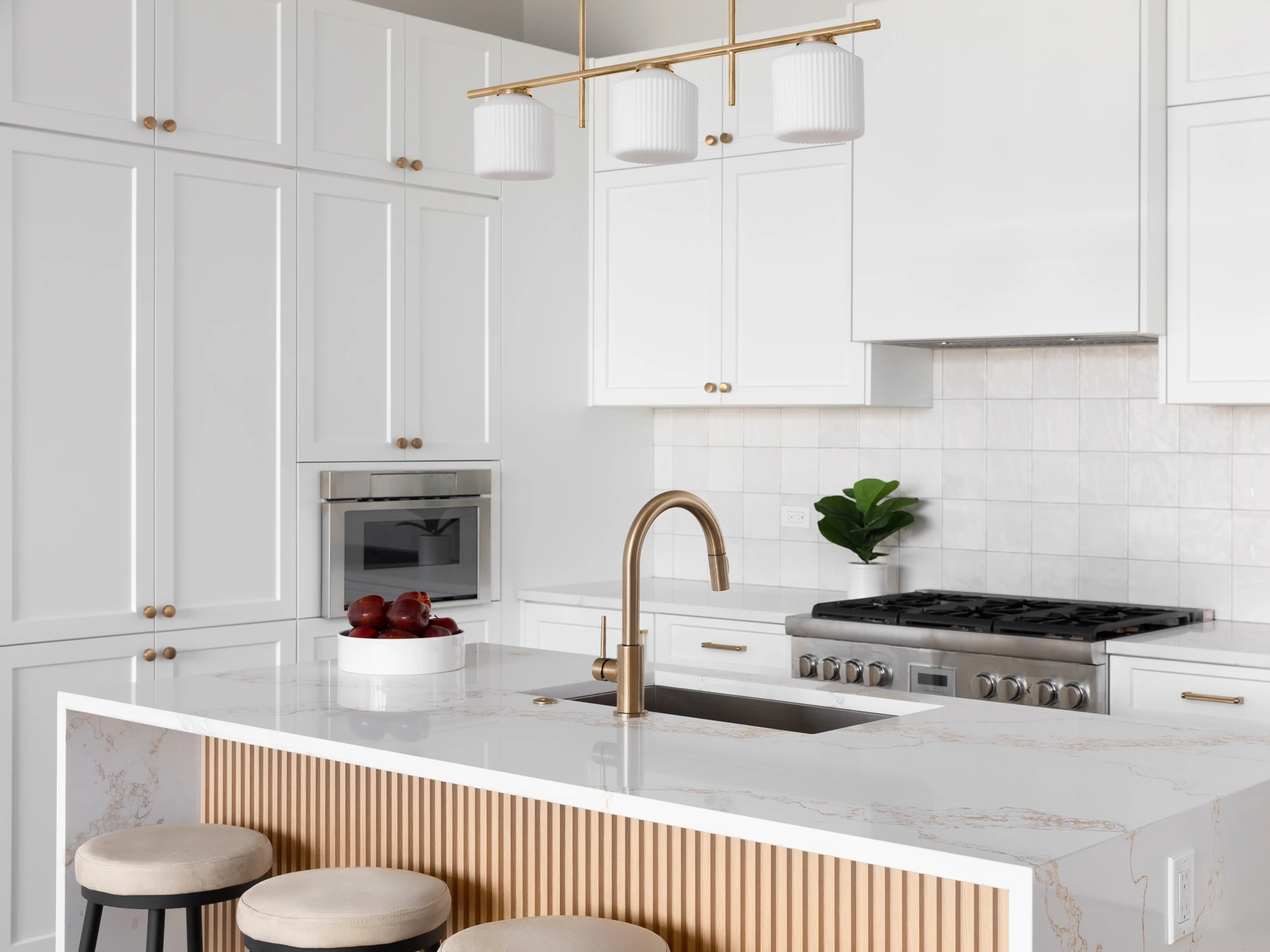
Kitchen worktop trends and ideas for 2026
We all know that the kitchen is the heart of the home, and it goes without saying that a cornerstone of every kitchen is a good worktop. After all, it’s where you’ll prepare delicious meals for the family and mix drinks when the neighbours are round.
Whether you’re leaning towards a classic marble design, a warm timber finish, or a more modern industrial look, your worktop takes up a huge amount of visual space, so it can have a big influence on how the whole kitchen feels.
We believe choosing the right material is just as much about how you live as it is about how you want your kitchen to look. A busy family kitchen might need something very different from a kitchen designed around entertaining, while a keen baker might have completely different priorities again.
So, what are the biggest kitchen worktop trends for 2026? Natural materials are still hugely popular, but we’re seeing more warmth, bolder stone patterns, slimmer profiles, and clever combinations of materials. The good news is that you don’t have to choose between a kitchen that looks current and one that will still feel right in 10 years’ time.
Natural surfaces are still having their moment
Natural stone has always had a place in high-end kitchen design, but its appeal has grown as homeowners have moved towards warmer, more tactile interiors.
Rather than the cool, clinical kitchens that were popular a few years ago, 2026 is all about creating spaces that feel comfortable and lived in. That means natural stone, timber, and earthy colours are being used to bring a little more personality into the room.
One of the biggest trends we’re seeing in kitchen countertop materials is the use of warm-toned stone alongside painted cabinetry, timber details, and softer lighting. Beige, taupe, cream, and warm grey worktops are particularly effective if you’re trying to create a kitchen that feels relaxed without becoming too traditional.
Marvellous marble
A marble kitchen design remains the epitome of luxury and elegance. Marble countertops an enduring favourite among homeowners who want a sophisticated, high-end finish.
Because it’s a natural stone, every slab is completely individual. The veining becomes part of the design, which means your island or worktop can become a genuine focal point rather than simply another surface in the room.
And in 2026, we’re seeing a move towards more expressive marble. Subtle white and grey veining will always have their place, but stronger movement, warmer tones, and dramatic patterns are being embraced too.
This works especially well when the rest of the kitchen is kept relatively simple. Pair a dramatic marble island with understated cabinetry and the stone can do the talking.
Of course, there are practical considerations. Marble is relatively porous and needs to be looked after, including sealing to protect it from staining and etching. Acidic foods like lemon and vinegar can also affect the surface. For some homeowners, that’s part of the charm. Marble changes with use and can develop a patina that gives the kitchen even more character.
Marble also stays naturally cool, making it a favourite with keen bakers. And if you’re designing a kitchen where the island is supposed to be the centre of the room, it’s hard to beat the visual impact of a beautiful piece of natural stone.
Quartz and quartzite: practical doesn’t have to mean plain
Quartz is still one of the most popular choices for modern kitchen worktops, particularly for homeowners who want the look of natural stone with relatively easier maintenance.
There are now far more quartz finishes available than the plain, uniform surfaces many people associate with the material. Marble-inspired veining has become particularly convincing, and this gives homeowners the opportunity to create the look of dramatic stone while choosing an engineered surface.
Quartz works brilliantly in both modern kitchens and more traditional ones. It can sit beautifully alongside shaker cabinetry, work as part of a minimalist handleless design, or provide a bright contrast to a darker island.
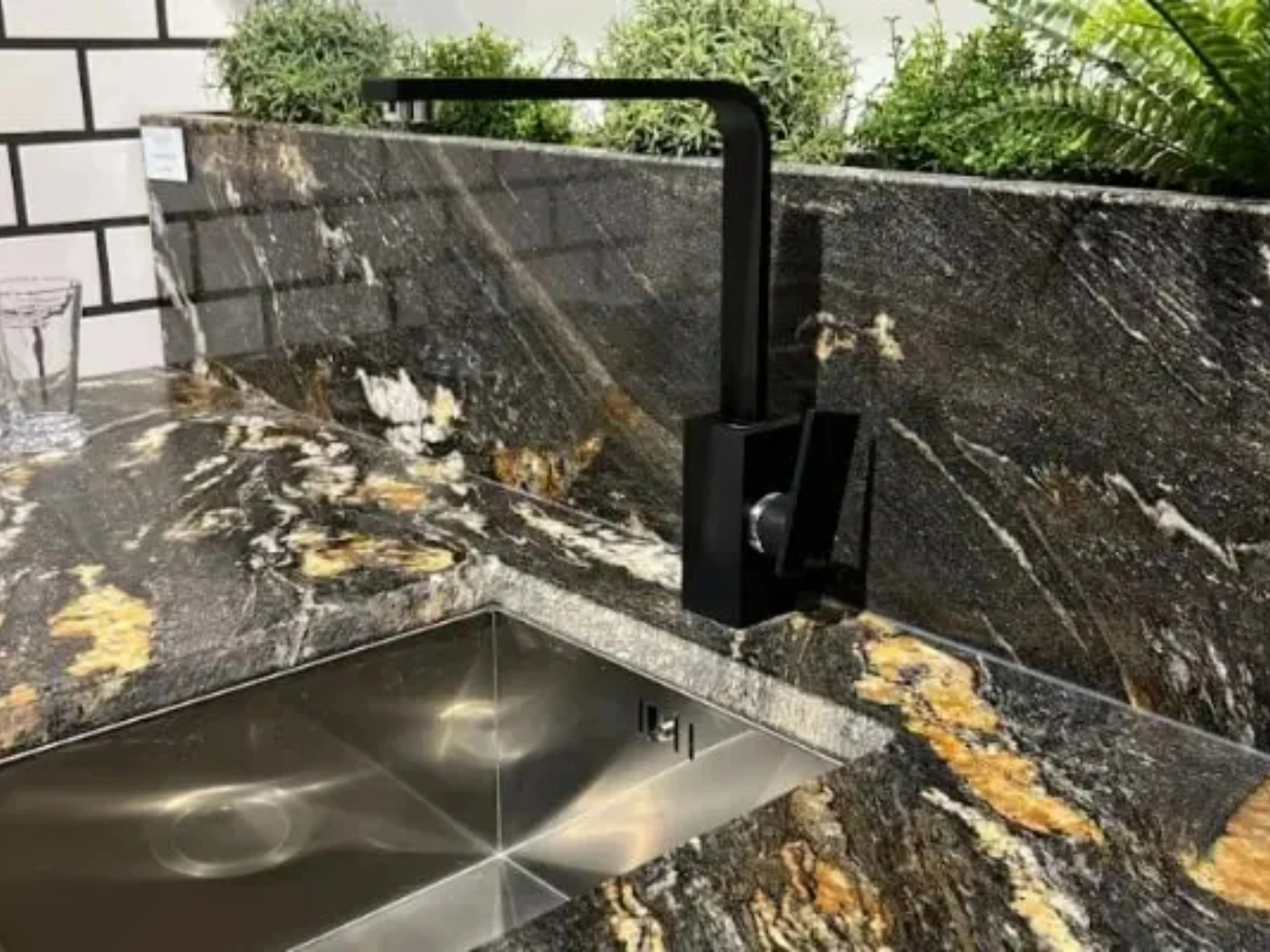
Quartzite, meanwhile, is becoming increasingly popular with homeowners looking for a natural stone that combines striking appearance with excellent durability.
Quartzite is a metamorphic rock, and its natural veining can be incredibly dramatic. It offers a different look from engineered quartz because every slab is unique, while its hardness makes it well suited to busy kitchens.
But the choice between quartz and quartzite isn’t simply about which one looks best. Your budget, lifestyle, maintenance preferences, and the rest of the kitchen all matter. That’s why we like to talk through the options with clients rather than treating worktop selection as a decision made in isolation.
Slim worktops are creating a lighter look
Another design change that’s become increasingly noticeable is the move towards slimmer worktop profiles. For years, thick worktops were often used to create a sense of luxury. Now, the opposite is becoming popular.
Slim surfaces can make cabinetry feel lighter and more modern, especially when they’re paired with handleless doors or simple shaker cabinetry. A thin quartz or porcelain worktop can look wonderfully elegant on a kitchen island, especially when the cabinetry below is allowed to do more of the visual work.
That doesn’t mean thicker worktops have just disappeared. A chunky timber breakfast bar or substantial stone island can still look fantastic. The key is choosing the profile to suit the design rather than simply following what’s fashionable.
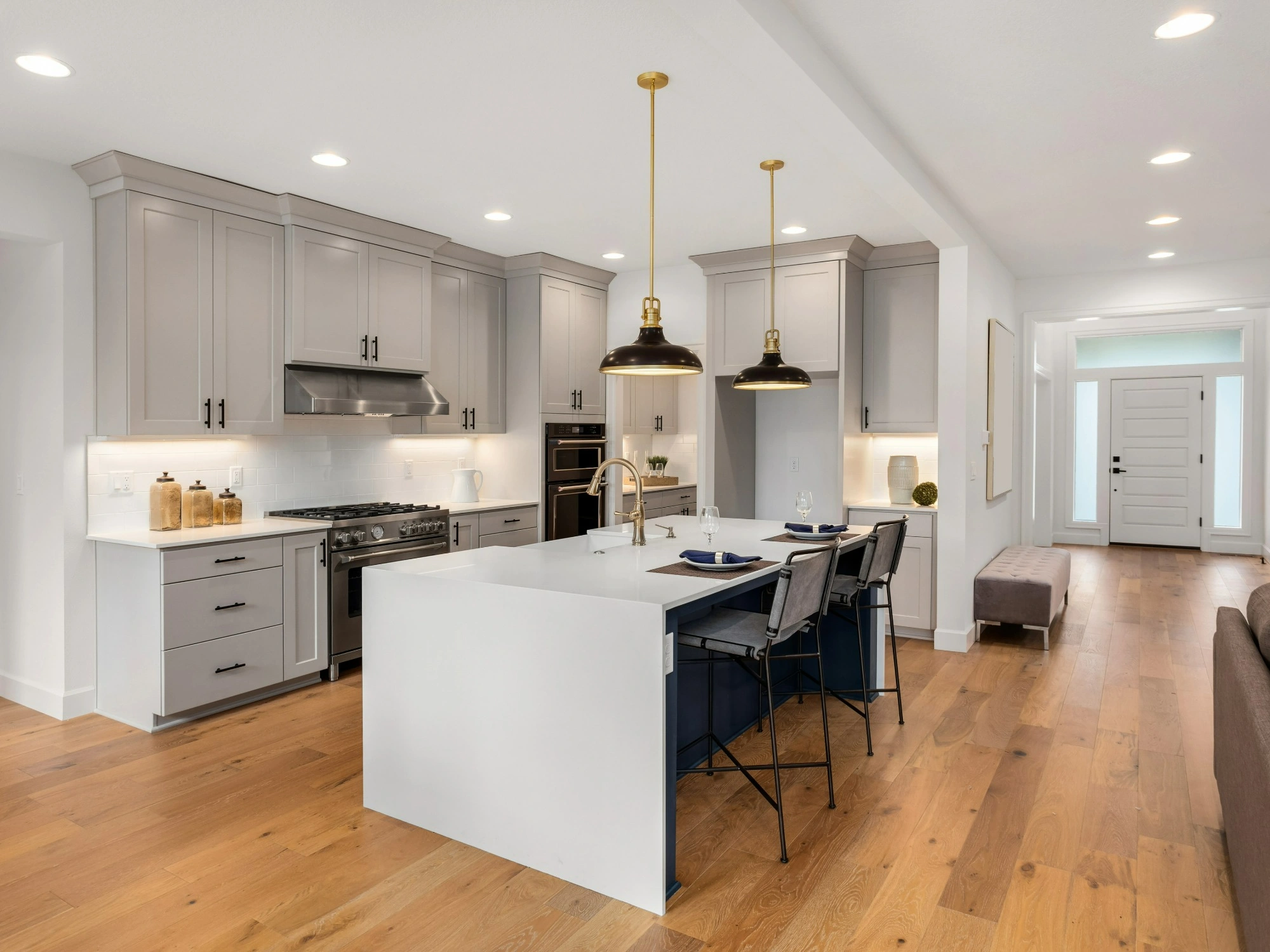
Waterfall worktops and statement islands
Kitchen islands have become much more than somewhere to prepare food. They’re often where people eat, work, entertain, and spend time together, so it’s no surprise that they’re also becoming one of the biggest opportunities to make a design statement.
A waterfall worktop is one way of doing this. Rather than stopping at the edge of the island, the material continues vertically down the side to the floor, creating a continuous visual line.
This works especially well with heavily veined marble or quartz because the pattern can flow around the edge of the island. It can also make a relatively simple island feel much more architectural.
Matching splashbacks are making a big impact
One of the strongest kitchen worktop trends for 2026 is the continued popularity of matching worktops and splashbacks. Instead of choosing a separate tiled splashback, homeowners are extending the same surface from the worktop up the wall.
The result is simple but effective. There’s less visual interruption, fewer grout lines to worry about, and more opportunity for the material itself to become a feature. This is a game-changer with expressive stone. If you’ve chosen a worktop with beautiful veining, carrying it up the wall allows that pattern to become a much bigger part of the room.
It’s also a handy trick for smaller kitchens. A continuous surface can make the space feel more open because there are fewer changes in colour and texture breaking up the walls.
Mixed materials bring warmth and personality
Not everything needs to match. In fact, one of the most interesting kitchen design trends for 2026 is the use of contrasting materials to create depth. Stone and timber are a particularly natural pairing, with the coolness of quartz or marble balanced by the warmth of oak or walnut.
You might have a pale stone worktop around the main kitchen with a solid timber breakfast bar attached to the island. Alternatively, a dramatic stone island could be paired with warmer timber cabinetry elsewhere in the room.
The same idea can be applied to colour schemes. A neutral worktop doesn’t necessarily need neutral cabinetry, and a darker surface can look fantastic against warm painted units. This is where bespoke design can really come into its own. Rather than selecting a kitchen from a fixed range, you can consider how different materials will work together across the whole room.
Bringing organic warmth with wood
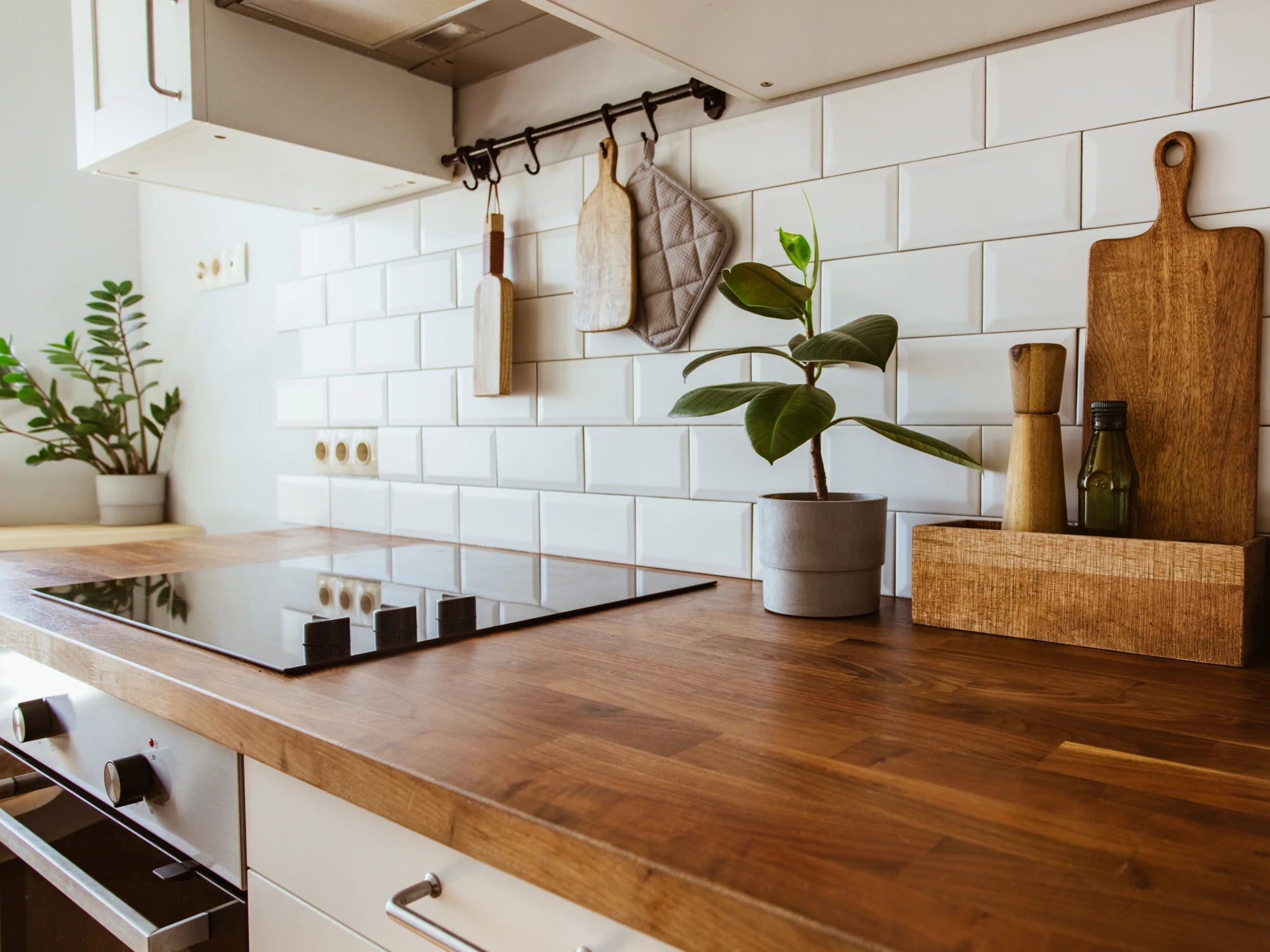
Wood surfaces are a timeless choice for the kitchen, with their natural grain bringing warmth and a more relaxed feel to the room. But timber worktops don’t have to mean a traditional in-frame kitchen. A simple oak surface can look just as good alongside contemporary cabinetry, modern lighting, and integrated appliances.
Butcher block worktops remain a popular option for keen cooks. Made from individual pieces of timber joined together, they have a solid, tactile appearance and can be sanded and refinished over time.
There’s also something quite appealing about the way timber changes as it ages. Small marks and signs of use become part of the surface rather than something that needs to be hidden.
Wood does need a bit more maintenance than some engineered surfaces, so it’s worth considering where you want to use it. A timber breakfast bar might be a better option than using it throughout a busy kitchen if you’re looking for a lower-maintenance worktop.
Stainless steel and the return of the industrial kitchen
Stainless steel worktops are traditionally associated with professional kitchens, but now they’re finding their way into residential spaces too. They’re practical, hygienic, and extremely heat resistant. This makes them a particularly sensible choice for keen cooks. They also bring an unmistakable industrial quality to a kitchen.
In 2026, though, stainless steel is being used in a softer way. Instead of creating an entire commercial-style kitchen, homeowners might use a stainless steel worktop around a cooking area and combine it with timber or natural stone elsewhere. The result is more relaxed and personal than the traditional professional kitchen.
Stainless steel can scratch, but some homeowners like the fact that it develops a lived-in appearance over time. If you want something that stays pristine, it probably isn’t for you. But if you like a surface that tells the story of how the kitchen is used, it can be a brilliant choice.
Are sustainable worktops becoming more popular?
Sustainability is playing a bigger role in kitchen design, and worktops are no exception.
Homeowners are increasingly asking where materials come from, how long they’re likely to last, and what happens to them at the end of their useful life. Recycled glass and paper composite surfaces are among the alternatives that can offer something different from conventional stone and timber.
The most sustainable choice will depend on the material, its manufacturing process, its lifespan, and how it will be maintained, so it’s worth asking questions rather than assuming that one label tells the whole story.
Longevity matters too. Choosing a high-quality worktop that can be lived with for many years may be a more sensible approach than replacing a cheaper surface every few years because your tastes have changed.
Why bespoke worktops make a difference
A beautiful worktop can only work properly if it’s designed around the kitchen beneath it. That’s one of the advantages of working with a bespoke kitchen company. We don’t simply supply a worktop and leave someone else to make it fit.
We’ve been creating bespoke kitchens for more than 20 years, and we oversee the project from the initial consultation through to design, manufacturing and installation. That means the worktop is considered alongside the cabinetry, appliances, sink, splashback, and island from the very beginning.
Our designers can help you compare materials and finishes in the showroom, while our manufacturing and installation teams handle the practical side of bringing the design to life. Our kitchen design process gives a better idea of how those different stages come together.
Jason, Company Owner at Premier Crafts, explains:
“A worktop should feel like it belongs to the kitchen rather than being added at the end. Because we manage the design, manufacturing, and installation ourselves, we can think about those details from the start and make sure the finished kitchen feels like one complete space.”
That’s especially important when you’re thinking about details like waterfall edges, integrated sinks, matching splashbacks, or unusual worktop profiles. These aren’t necessarily simple additions to an existing kitchen, but when they’re considered during the design stage, they can become part of the architecture of the room.
Bringing your kitchen worktop ideas to life
There are plenty of exciting kitchen worktop trends around for 2026, but the best kitchens aren’t necessarily the ones that follow every one of them.
A warm timber surface might be perfect for one home, while another might call for some dramatic marble. A slim quartz worktop could suit a modern-style extension, whereas a substantial natural stone surface may work better in a traditional property.
That’s why we take a personal approach to every kitchen we design. With more than two decades of experience, we know that good design starts with listening to the person who’ll actually be using the room.
From your first consultation, we’ll talk through how you use your kitchen, what you like, what you don’t like, and what you want the finished space to feel like. From there, our designers can explore ideas with you before our own craftsmen manufacture the bespoke elements and our installation team brings everything together.
You can explore more about our bespoke kitchens or visit one of our showrooms in Washington, Cleadon, or Cullercoats to see different materials and finishes for yourself.
If you’re planning a new kitchen and aren’t sure which worktop is right for you, we’d love to help. You can book a free consultation and start exploring what could work for your home. After all, the right worktop can be the detail that brings the whole kitchen together.
Back to Blog