Cultivating calm in the modern kitchen
As life has gotten busier and more complicated for all of us, the kitchen’s purpose has shifted. Once considered a utilitarian room hidden from view, it has now become the emotional and recreational heart of the home. It’s a place where you can find a moment of calm and quiet amidst the endless noise of daily life.
However, cultivating said calm in a modern kitchen is about so much more than the way it looks. It’s about thoughtful design choices that reduce visual clutter, enhance flow, and support how you live day to day.
From seamless cabinetry and intuitive layouts to calming colour palettes and carefully chosen materials, a well-designed kitchen can positively influence mood, wellbeing, and how a home feels.
This handy guide explores what defines a modern kitchen, the design trends shaping the last five years, and how you can create a serene, harmonious space that feels both contemporary and timeless.
What defines a modern kitchen?
A modern kitchen is best understood not as a single style, but as a philosophy of design. At its core, it prioritises simplicity and intentionality. Clean lines, uncluttered surfaces, and integrated elements are all hallmarks, but modern kitchens also embrace warmth and texture to avoid feeling cold or clinical.
Over the last five years, modern kitchen design has shifted away from stark minimalism toward a softer, more human approach. While handleless cabinetry, streamlined appliances, and seamless finishes remain popular, they are now paired with natural materials, muted colours, and tactile surfaces that create a sense of calm.
Modern kitchens today are designed to work effortlessly. Storage is cleverly concealed, layouts are intuitive, and technology is integrated discreetly. Whether it’s a large open-plan kitchen or a beautifully optimised galley layout, modern design is about making the most of the space available while maintaining visual harmony.
Five key trends from the past five years
Over the past half-decade, modern kitchen design has shifted away from fleeting trends and toward spaces that feel grounded, enduring, and thoughtfully crafted.
Rather than chasing bold statements that date quickly, homeowners are increasingly investing in kitchens that balance contemporary looks with longevity and everyday practicality. The following five key trends define how modern kitchens have evolved in recent years, and why they continue to resonate.
Timeless modern design
One of the most notable shifts has been a move toward kitchens that feel timeless rather than overtly trend-led. Clean lines and uncluttered layouts remain central to modern design, but they are now softened with warmer materials, subtle detailing, and classic proportions.
This approach reflects a growing desire for spaces that won’t feel outdated in a few years’ time. Instead of high gloss finishes and stark contrasts, modern kitchens now favour restrained palettes and balanced compositions that can adapt as tastes change.
The focus is on creating a calm, cohesive environment that feels considered rather than loud, allowing the kitchen to remain relevant for decades rather than seasons.
The enduring appeal of the modern in frame kitchen
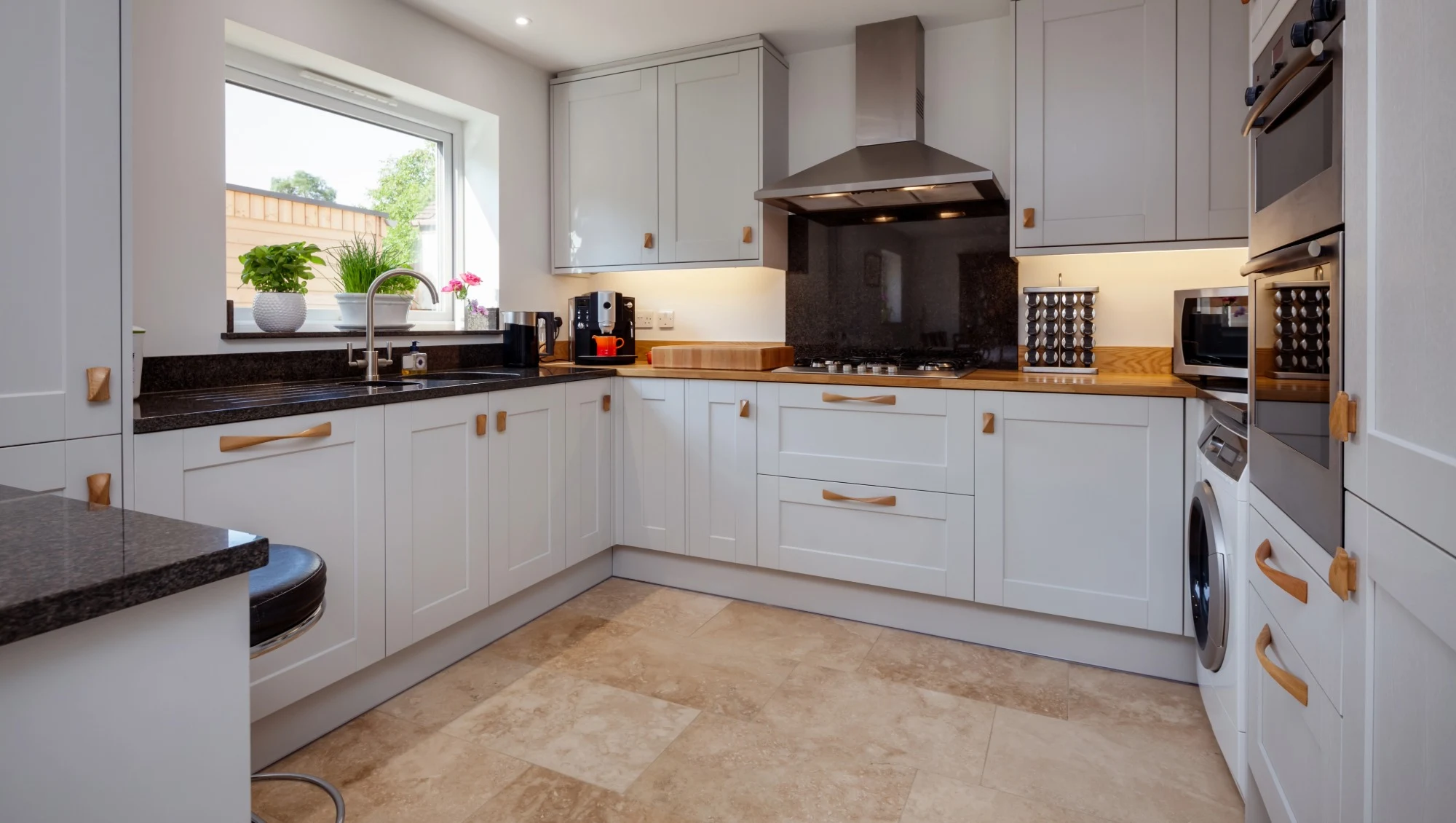
Among these timeless influences, the modern in frame kitchen has emerged as a firm favourite. Traditionally associated with classic interiors, in frame cabinetry has been reimagined over the last five years to suit contemporary homes.
By combining solid craftsmanship with clean, modern proportions, in frame kitchens strike a perfect balance between heritage and innovation. The framed structure adds depth and definition, lending an air of refinement, while sleek door styles and muted colour choices keep the overall look firmly modern.
This versatility makes in-frame kitchens particularly appealing in both period properties and new builds, where they provide a sense of permanence and quality without feeling overly traditional.
Evolving cabinetry and shelving solutions
Cabinetry design has also undergone a subtle but significant transformation. Flat-fronted units remain a cornerstone of modern kitchens, valued for their simplicity and ability to create uninterrupted lines. However, recent years have seen these paired with more nuanced details to add a touch of additional interest.
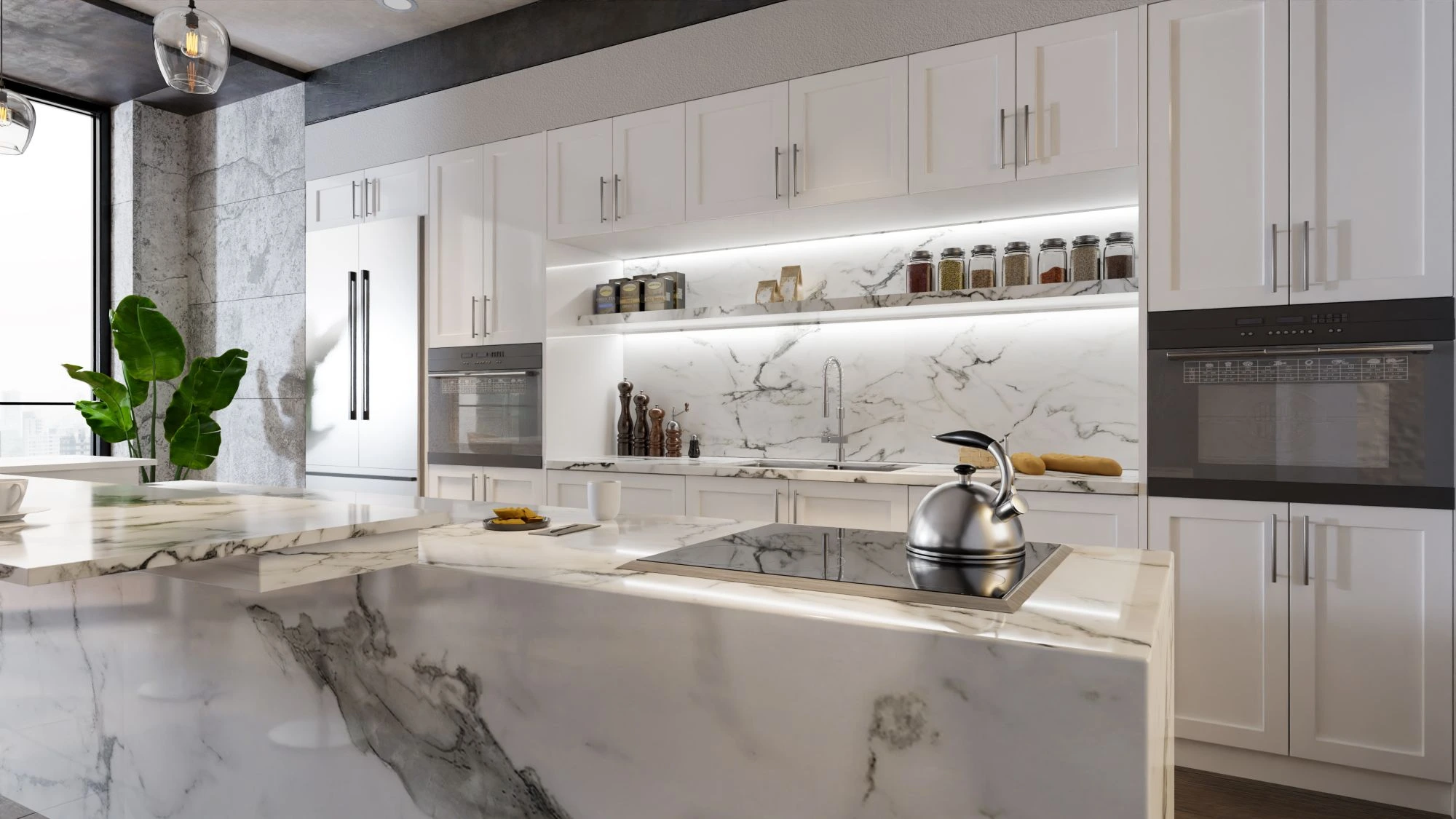
Textured finishes, such as timber veneers, matte lacquers, and softly grained surfaces, are increasingly popular, bringing tactility to otherwise minimalist designs. Open shelving has also become more refined, used sparingly to display curated objects, ceramics, or glassware rather than acting as primary storage.
As a result, modern kitchen cabinets and shelving now perform a dual role. They offer intelligent storage that keeps clutter out of sight while also contributing to the kitchen’s overall character. When thoughtfully designed, cabinetry becomes an integral part of the aesthetic rather than a purely functional backdrop.
Thoughtful material choices
Material selection has become far more intentional in modern kitchen design. Rather than choosing surfaces solely for visual impact, homeowners are placing greater emphasis on how materials perform and age.
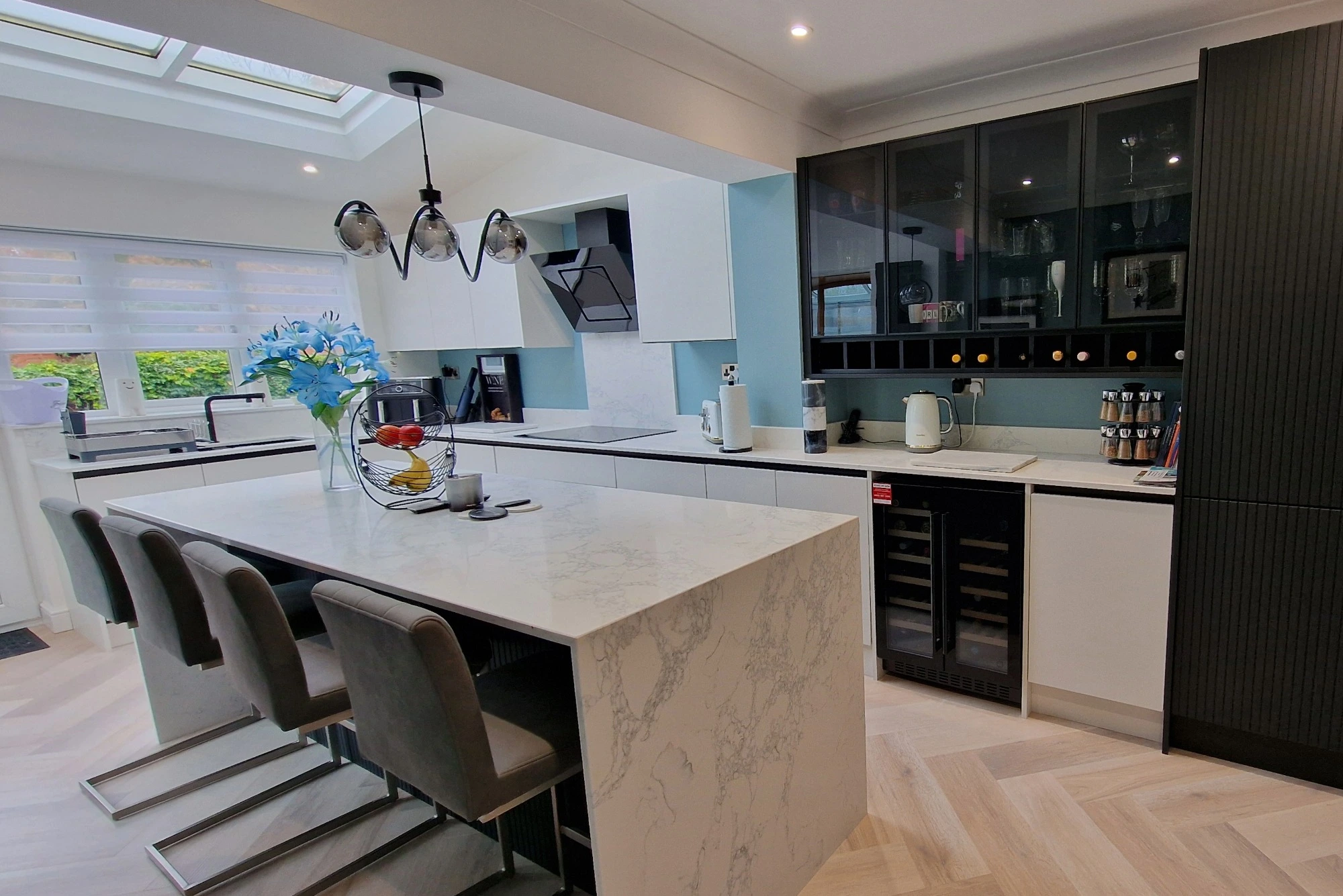
Natural stone remains a popular choice, valued for its unique veining and organic feel, while engineered quartz and composite materials offer durability and consistency without sacrificing elegance. These surfaces are selected not only for their appearance but for their tactile qualities and ease of maintenance, supporting kitchens that feel as good to use as they look.
This shift has made understanding kitchen countertop materials an essential part of the design process. A well-chosen worktop can anchor the entire scheme, add quiet confidence and ensure the kitchen stands up to daily life without feeling worn or dated.
Understated statement fixtures
The final defining trend of the last five years is the rise of statement features that remain understated. Rather than bold, attention-grabbing elements, modern kitchens now favour fixtures that add subtle character and refinement.
Sculptural lighting, refined taps, and carefully designed sinks contribute to the overall sense of quality without overwhelming the space. Contemporary sink designs, for example, are streamlined and purposeful, complementing minimalist cabinetry while offering excellent functionality.
These finishing touches are often where personality is introduced, allowing homeowners to express individuality in a controlled, cohesive way. By keeping these elements refined rather than ostentatious, modern kitchens maintain their calm, balanced look, proving that impact doesn’t have to come at the expense of serenity.
Designing calm through simplicity & space
At the heart of a serene kitchen is a sense of order. Visual clutter can quickly disrupt the feeling of calm, so modern kitchens prioritise smart storage solutions that keep surfaces clear and spaces flowing.
Hidden storage is essential. Integrated appliances, pull-out larders and internal drawers are all sought-after bespoke features that ensure everything has its place. When storage is thoughtfully designed, the kitchen feels calmer because the eye isn’t constantly drawn to competing elements. This is particularly important in smaller spaces, where every design decision must work harder.
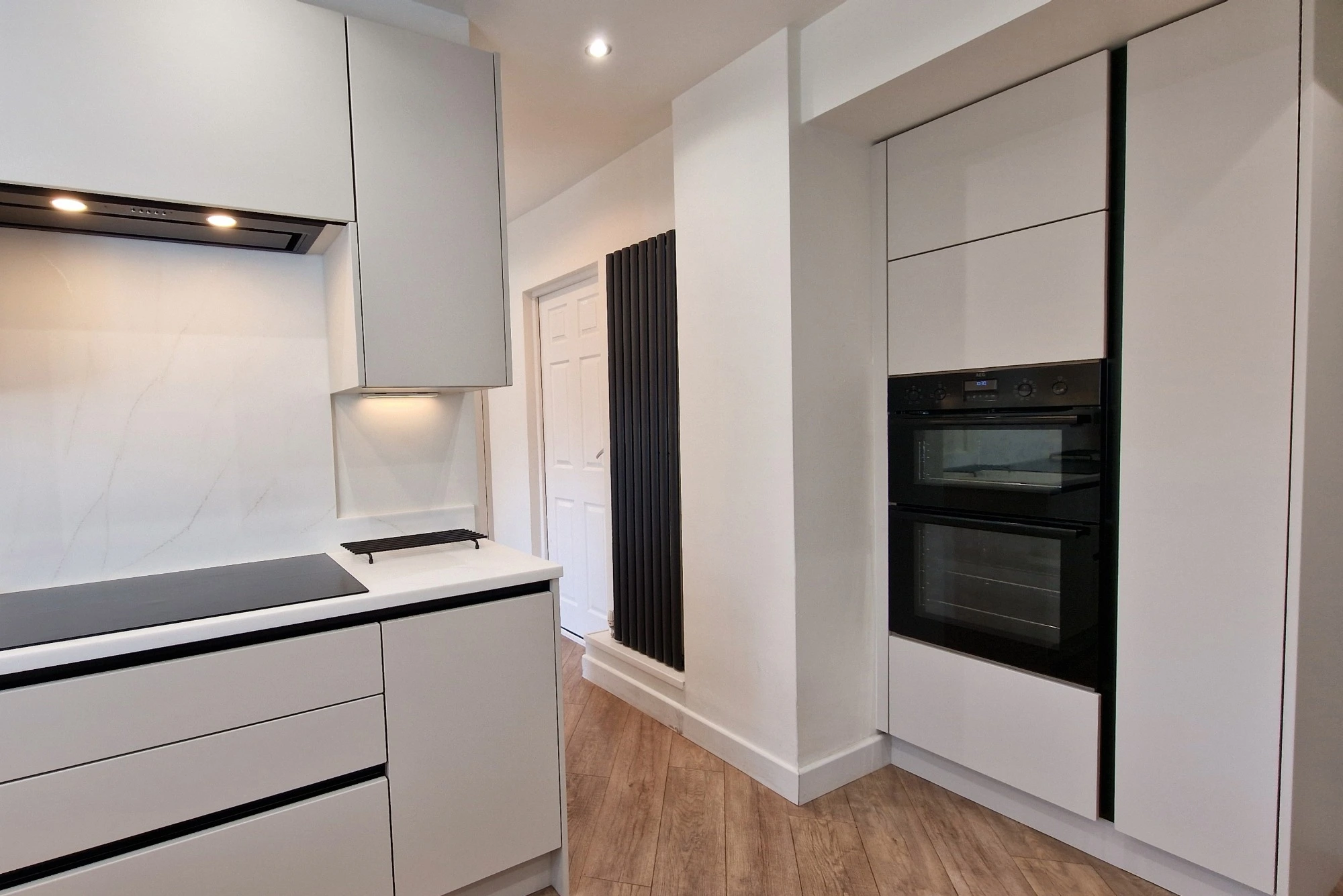
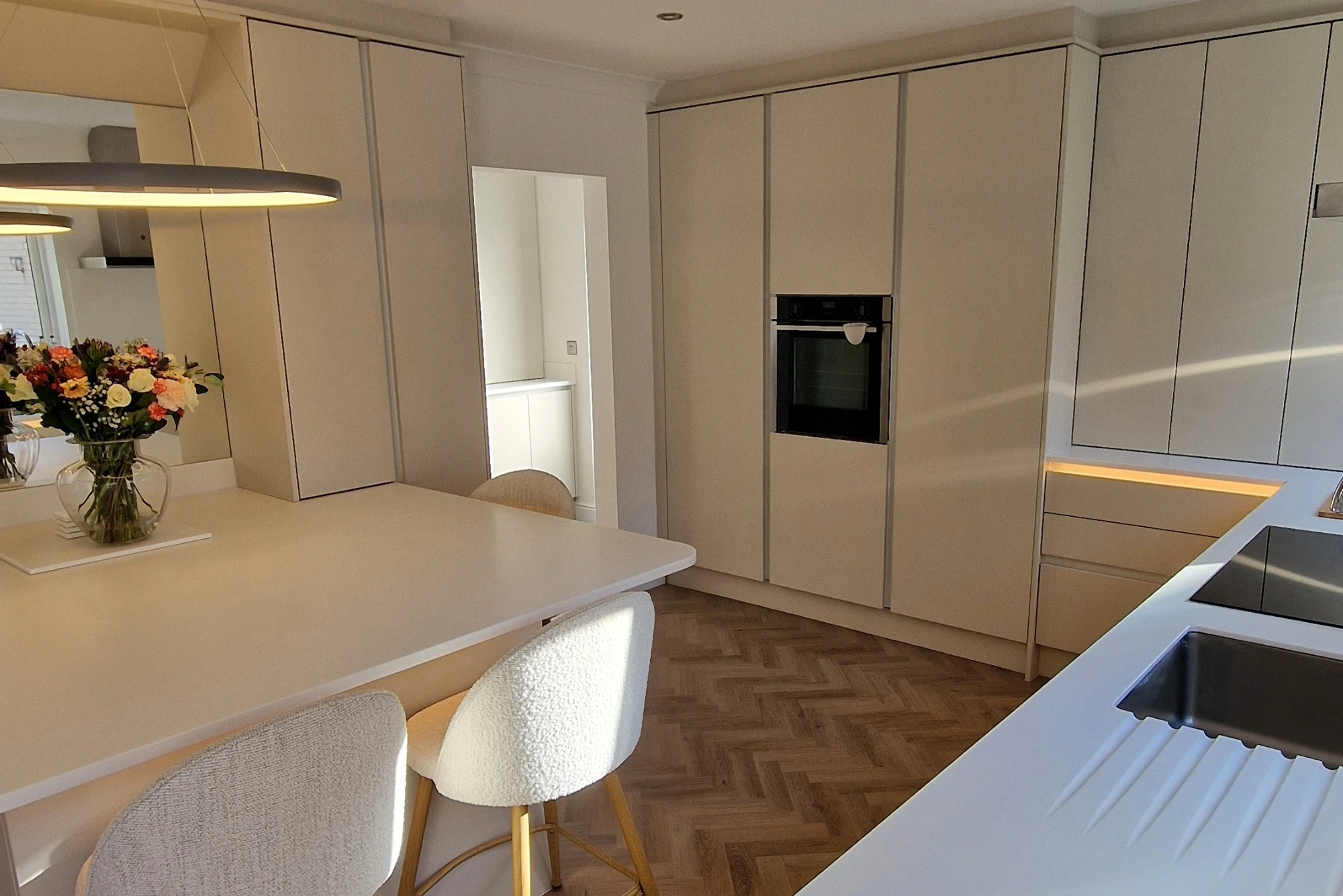
Seamless design plays a key role here. Handleless doors, push-to-open mechanisms, and continuous lines across cabinetry help create a sense of cohesion. The kitchen reads as one harmonious space rather than a collection of individual components, which naturally promotes a feeling of calm.
Making the most of the available space also contributes to a sense of true calm. Well-planned layouts ensure that movement feels intuitive and unforced. Whether navigating between preparation, cooking, and cleaning zones or transitioning from kitchen to dining area, ease of movement supports a more relaxed environment.
Colour as a tool for calm
Colour has a profound effect on how a space feels, and nowhere is this more apparent than in the kitchen. Rather than repeating trends, modern kitchens now use colour strategically to support mood and balance.
Neutral tones such as warm greys, taupes, and muted beiges provide a grounding backdrop, while earthy greens, deep blues, and gentle clay shades introduce a sense of nature and tranquillity. When used thoughtfully, colour can define zones within an open-plan space without disrupting flow.
Choosing the right palette is about harmony rather than contrast. Understanding how to pick the perfect kitchen colour scheme involves considering light levels, materials, and how the space connects to the rest of the home. A calm kitchen often echoes tones found elsewhere, creating a sense of continuity and cohesion.
Texture plays a supporting role here. Matte finishes, wood grains, and natural stone absorb light softly, reinforcing a relaxed atmosphere without visual noise.
Flow, layout & open-plan living
Flow is one of the defining principles of modern kitchen design, particularly as open-plan living continues to shape contemporary homes. The kitchen is no longer a standalone room but part of a larger, interconnected environment.
Open-plan kitchens encourage connection and sociability, but successful designs rely on clarity and structure. Consistent materials and carefully positioned islands or peninsulas help guide movement while maintaining openness.
Zoning allows different activities to coexist without conflict. Subtle changes in lighting, cabinetry depth, or layout help distinguish cooking, dining, and living areas without introducing needless physical barriers.
Even within more compact layouts, flow remains critical. Thoughtfully designed galley kitchens demonstrate how linear spaces can feel calm and efficient when proportions, lighting, and storage are carefully resolved.
Integrating modern functionality without disruption
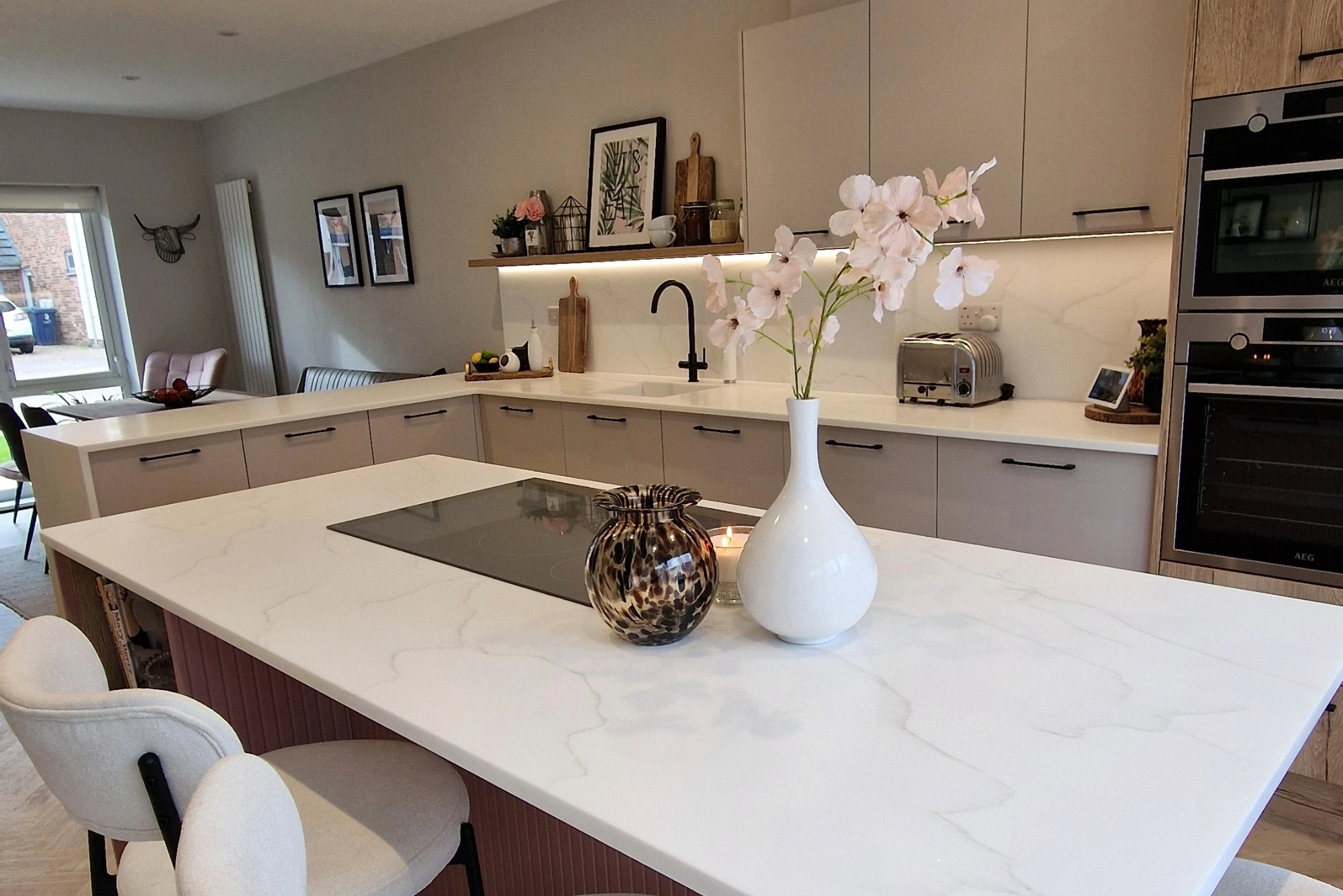
Functionality is a non-negotiable in a modern kitchen, but it should never dominate the design. The most successful spaces integrate technology quietly, enhancing usability while preserving visual calm.
Built-in appliances and streamlined cooking zones help maintain clean lines. Boiling water taps, when integrated thoughtfully, reduce countertop clutter and support efficient daily routines. Integrating boiling water taps into your kitchen design allows convenience to sit comfortably within a calm, considered aesthetic.
Lighting also contributes significantly to how a kitchen functions and feels. Layered lighting schemes, combining ambient and accent lighting, allow the space to adapt throughout the day, supporting both energy and relaxation as needed.
Why bespoke design makes the difference
A calm kitchen cannot be achieved through a one-size-fits-all approach. Bespoke design ensures the space is shaped around how you live, not the other way around.
Choosing a bespoke kitchen allows for intelligent use of space, tailored storage solutions, and careful consideration of proportion and flow. It also enables a deeper focus on craftsmanship and material quality, ensuring the kitchen feels cohesive and enduring.
The reasons to choose a bespoke kitchen extend beyond appearance. Bespoke design supports longevity, adaptability, and a sense of ownership, all of which contribute to a calmer, more satisfying everyday experience.
Partnering with Premier Crafts
Cultivating calm in the modern kitchen requires experience, sensitivity, and attention to detail. From the first conversation to final installation, working with a specialist ensures that every element is resolved with care.
Premier Crafts’ kitchen design and installation process is always collaborative and considered, taking the time to understand your space, lifestyle, and aspirations.
Whether you are drawn to understated contemporary design, refined in frame detailing, or a seamless blend of both, their bespoke approach ensures the finished kitchen feels balanced, functional, and deeply personal.
A well-designed kitchen should support daily life while offering moments of calm and clarity. If you’re ready to create a space that feels timeless, intuitive, and beautifully resolved, partnering with Premier Crafts is the natural next step, and booking a free consultation is where that journey begins.
Back to Blog